The Quiet Legacy of Major Dermot Neill: How a Father’s Grace Shaped Sam Neill’s Life
Some family stories are passed down with pride. Others arrive in fragments—half-spoken memories, awkward silences, and questions that are never fully answered. For acclaimed actor Sam Neill, one of the defining influences of his life was rooted not in fame or success, but in a painful chapter that unfolded long before he became an international star. It was a story of reputation, sacrifice, and resilience, carried from Ireland to the far side of the world, where one family sought a fresh beginning.
Behind Sam Neill’s warm public persona lies the legacy of his father, Major Dermot Neill—a man whose military career ended under circumstances that would leave lasting marks on the family. Though history has often remembered the headlines more than the man himself, Sam has consistently spoken with admiration about his father’s character, suggesting that the lessons he learned from him mattered far more than any public controversy.
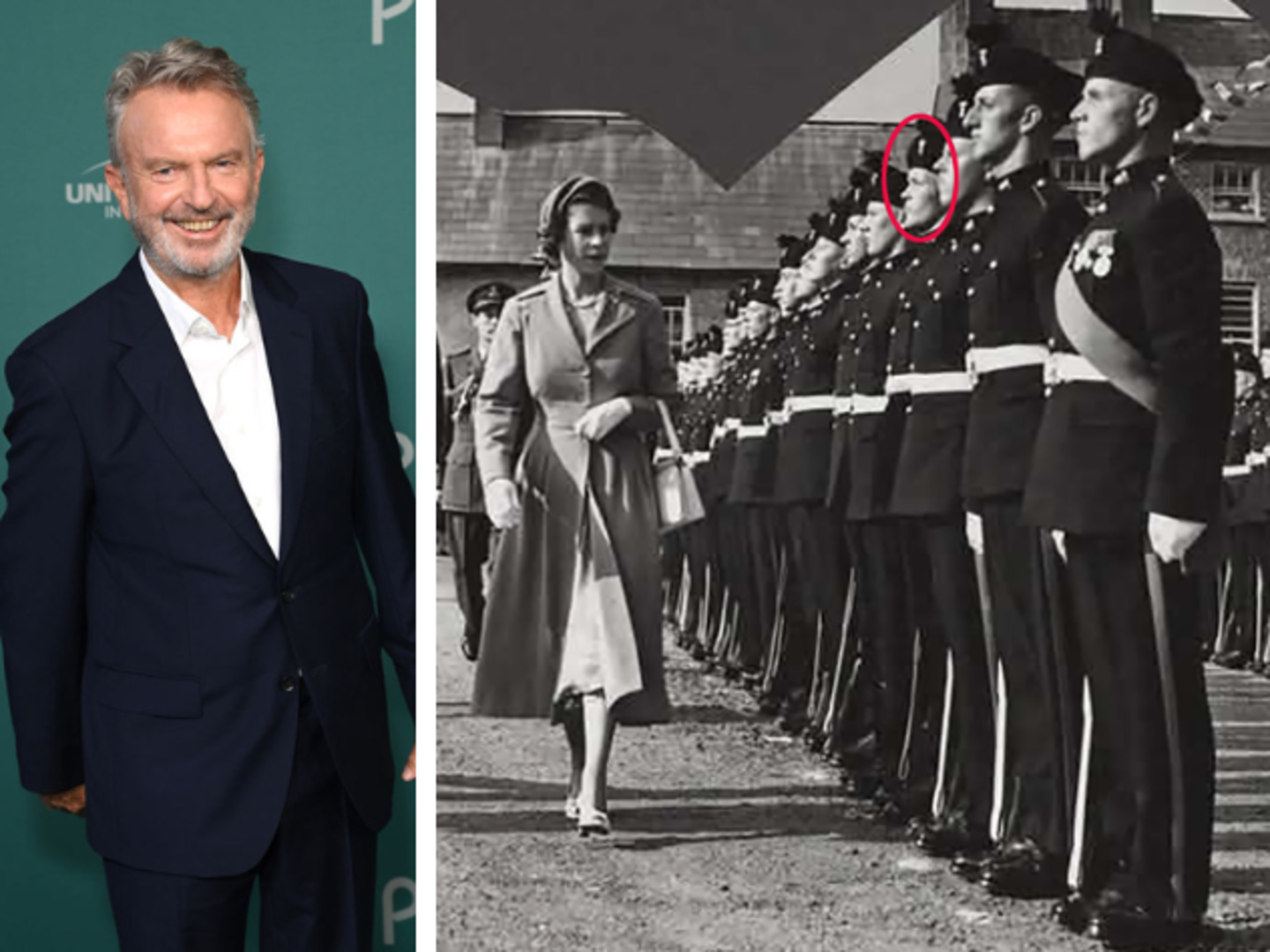
Major Dermot Neill served as an officer in the British Army during a period of enormous political and military upheaval. After the Second World War, his career became intertwined with one of the era’s most controversial episodes involving military intelligence in Northern Ireland. Allegations, rumors, and political pressure created an atmosphere where careers could be destroyed long before all the facts were understood. Whether fairly or unfairly judged, Dermot Neill ultimately found himself leaving behind the military life that had defined him.
For many families, such an ending would have been devastating enough. Yet the Neills also chose to leave Ireland altogether, emigrating to New Zealand when Sam was still a young child. What might have appeared to outsiders as simply another postwar migration carried a deeper emotional weight. It meant abandoning familiar places, rebuilding careers, and starting over in a country thousands of miles away while carrying the lingering shadow of unresolved controversy.

Children often absorb more than adults realize. Although Sam was too young to fully understand the political complexities surrounding his father’s departure, he grew up aware that something significant had happened. There were stories left untold, emotions carefully restrained, and an unmistakable sense that dignity sometimes means accepting unfairness without bitterness.
What impressed Sam most was not what his father had lost, but how he responded after losing it.
Rather than allowing disappointment to define him, Major Dermot Neill quietly built a new life in New Zealand. He entered the business world, worked hard, and devoted himself to providing stability for his family. According to Sam’s recollections over the years, his father rarely indulged in self-pity. There was no campaign to restore his reputation, no public performance of victimhood, and no obsession with revisiting old grievances. Instead, he focused on moving forward.
That quiet resilience became one of the greatest lessons Sam ever received.
As Sam matured and eventually entered one of the world’s most image-conscious professions, he often reflected on the contrast between genuine integrity and public appearances. In interviews and in his memoir, he has described his father as a fundamentally honorable man whose treatment left him believing that institutions could sometimes discard loyal people when circumstances became politically inconvenient.
Rather than filling him with cynicism, however, this realization encouraged Sam to value authenticity above image. Watching his father preserve his dignity despite profound disappointment showed him that character is measured not by public applause but by private conduct. Success, he learned, could disappear overnight; integrity could not.
Years later, as Sam Neill became internationally recognized through films such as Jurassic Park, he developed a reputation that stood apart from many Hollywood celebrities. Fans and colleagues alike frequently describe him as refreshingly grounded, approachable, and uninterested in cultivating an artificial superstar image.
Understanding his family history helps explain why.
Having witnessed the consequences of reputation being shaped by forces beyond one’s control, Sam has often seemed skeptical of superficial fame and carefully manufactured celebrity culture. Rather than chasing glamour, he has embraced a quieter life centered around family, friends, wine-making, farming, and meaningful work. His humor is self-deprecating, his interviews remarkably candid, and his public persona refreshingly free of pretension.
For many admirers, learning about Major Dermot Neill adds an entirely new dimension to that authenticity. It becomes easier to understand why Sam appears uncomfortable with vanity or exaggerated self-importance. The values that shaped him were forged not on film sets, but within a family that understood how fragile public reputation could be.
Fans who discover this chapter of Sam’s life often express renewed admiration for both father and son. Online discussions frequently note that Sam’s humility feels genuine rather than carefully curated. His refusal to present himself as larger than life seems less like a branding strategy and more like the natural result of lessons learned at home.
Many also find the story deeply human. Instead of being defined by scandal, the Neill family chose resilience. Instead of allowing bitterness to dominate their lives, they invested in creating a hopeful future in a new country. That decision ultimately made possible the remarkable career that would later bring Sam Neill into millions of homes around the world.
Perhaps that is the greatest irony of all. Had Major Dermot Neill’s career unfolded differently, the family’s path might never have led to New Zealand, where Sam would eventually discover the opportunities that shaped his extraordinary acting career.
Looking back, Sam has never portrayed his father as a flawless hero. Rather, he remembers him as a decent man who met adversity with remarkable composure. That distinction matters. Heroism is often imagined as dramatic acts performed before cheering crowds. But sometimes its truest form is much quieter: getting up each morning after disappointment, protecting one’s family from bitterness, and refusing to surrender personal dignity.
The bond between father and son was therefore built not upon shared success, but upon shared values. Major Dermot Neill may have lost the career he expected to spend a lifetime building, yet he left his son something infinitely more enduring—a model of courage without theatrics, honor without recognition, and grace without resentment.
In the end, the Neill family’s legacy is not defined by the controversy that followed them across continents. It is defined by the remarkable way they endured it. Long after headlines faded and rumors were forgotten, what remained was a father’s quiet example and a son’s lifelong commitment to authenticity.
For audiences who have admired Sam Neill for decades, that may be the most moving revelation of all. Behind the celebrated actor stands the enduring influence of a man whose greatest achievement was not military rank or public acclaim, but demonstrating that even when life strips away titles and certainty, dignity remains a choice. And sometimes, that quiet choice becomes the most powerful inheritance a parent can ever leave.