Beyond the Tributes: The Untold Chapter of Richard Scolyer’s Family After His Final Gift
Beyond the Tributes: The Untold Chapter of Richard Scolyer’s Family After His Final Gift
For a time, Australia seemed united in grief.
The passing of Professor Richard Scolyer AO—the internationally renowned melanoma researcher who courageously became the first patient to undergo an experimental immunotherapy approach for his own aggressive brain cancer—prompted an outpouring of tributes unlike almost any seen in Australian medicine.
His courage was celebrated. His scientific legacy was honoured. His extraordinary willingness to place himself at the centre of research offered hope to countless families facing glioblastoma.
But long after the headlines faded, another story quietly continued behind closed doors.
The nation remembered a medical pioneer
Richard Scolyer’s achievements had already reshaped cancer treatment long before his own diagnosis.
As Co-Medical Director of the Melanoma Institute Australia and one of the world’s leading pathologists, he helped transform melanoma survival through decades of research alongside Professor Georgina Long.
Then, in 2023, everything changed.
Diagnosed with an aggressive glioblastoma after collapsing overseas, Scolyer made an extraordinary decision. Rather than following conventional treatment alone, he agreed to become the first person to receive an experimental immunotherapy strategy before brain surgery—a world-first approach designed not only to help himself, but to generate knowledge that could benefit future patients.
Throughout his illness, he shared scans, treatment updates and personal reflections with remarkable openness, allowing Australians to witness both the promise of medical innovation and the harsh realities of living with an incurable disease.

Behind every public hero was a private family
While the country watched one of Australia’s greatest medical minds confront his own mortality, another battle unfolded quietly at home.
His wife, Dr Katie Nicoll, and their three children stood beside him through surgeries, scans, moments of hope and periods of uncertainty that rarely appeared in public.
Family photographs shared during his illness often showed something strikingly ordinary.
Walks together.
Birthdays.
Father’s Day celebrations.
Simple afternoons that carried far greater meaning because everyone understood how precious time had become.
For Richard, those moments were never separate from his scientific mission—they were the reason he kept fighting.
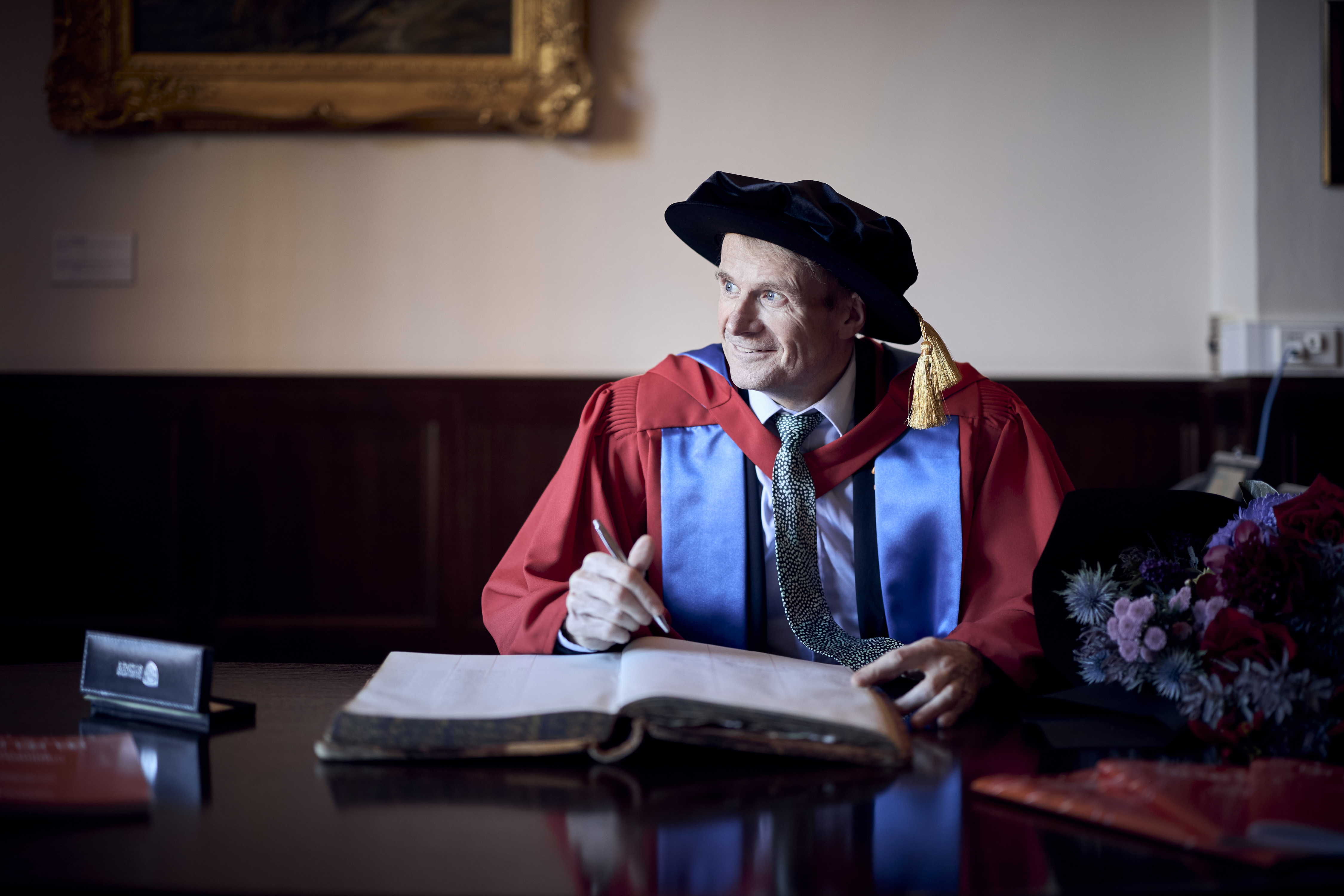
The silence that follows public grief
When someone of Richard Scolyer’s stature dies, the first weeks are filled with remembrance.
Political leaders pay tribute.
Colleagues reflect on remarkable achievements.
Medical institutions celebrate a career that changed lives.
Eventually, however, public attention moves on.
For families, grief does not.
It simply becomes quieter.
The interviews end.
The television cameras disappear.
Yet birthdays still arrive. Family milestones continue. Empty seats at the dinner table remain.
For the people who loved him most, the absence becomes part of everyday life rather than a headline.

His final gift continues to shape medicine
Although Richard Scolyer is no longer here, the research he helped make possible continues.
Scientists are still studying data gathered through his groundbreaking treatment, hoping it will improve understanding of glioblastoma and help develop more effective therapies for future patients.
Many researchers have described his decision to undergo the experimental approach as one of the most significant personal contributions ever made by a clinician to cancer research.
It was a choice rooted not simply in hope for himself, but in hope for people he would never meet.
That legacy continues to reach far beyond Australia.

A father first, a medical legend second
To colleagues, Richard Scolyer was a brilliant scientist.
To patients, he became a symbol of courage.
But to those waiting for him at home, he was something much simpler.
A husband.
A father.
Someone whose greatest achievements were measured not only in medical journals, but in the ordinary moments shared with family.
That is perhaps the part of his story that receives the least attention.
Behind every award, every international honour and every scientific breakthrough was a man who deeply valued home, family and the time they spent together.
A legacy carried in two different ways
Australia will continue remembering Richard Scolyer as one of its greatest medical pioneers.
Researchers will continue building on the knowledge he helped create.
Future patients may one day benefit from discoveries that began with his extraordinary willingness to place himself at the centre of experimental treatment.
Meanwhile, his family carries a different legacy.
Not one measured by citations or honours, but by memories of the husband and father who chose hope when certainty was impossible.
In many ways, that may be Richard Scolyer’s most enduring gift—not only the scientific pathway he helped open for future generations, but the example of extraordinary courage, quiet love and selfless purpose that continues to inspire long after the tributes have ended.