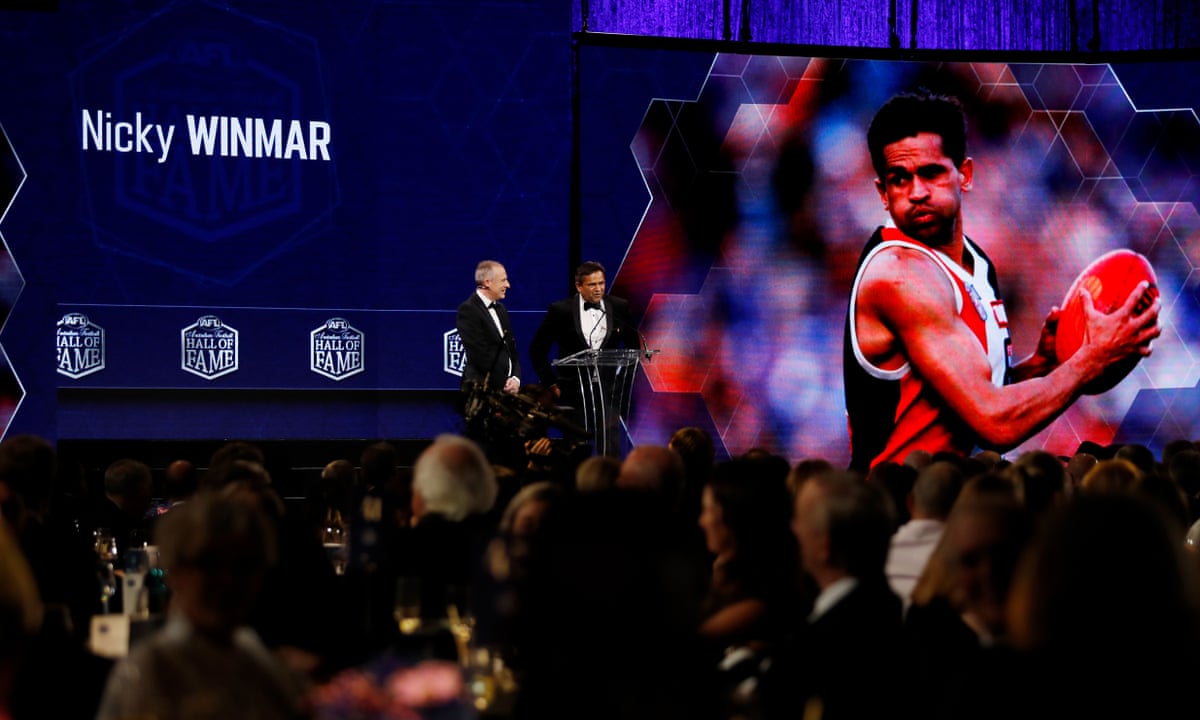
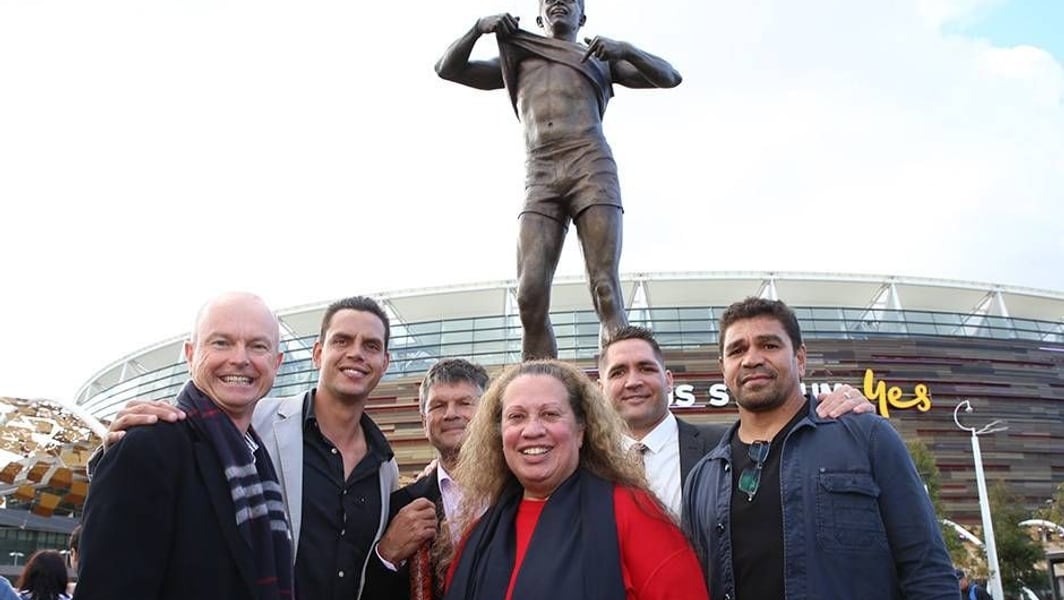
Once celebrated as an untouchable icon of Australian sporting history and a pioneering symbol of racial pride, AFL legend Nicky Winmar has experienced a devastating, rapid fall from grace. Following a shocking domestic violence conviction, the legendary St Kilda star has been systematically stripped of his highest honors and had his historic bronze statue physically torn down, igniting a fierce debate that has divided the nation.
To fully comprehend the sheer magnitude of Nicky Winmar’s dramatic fall from grace, one must understand the immense cultural and athletic legacy he once commanded in Australia.
For decades, Winmar was not merely a brilliant footballer; he was an undisputed national hero and a deeply revered figure within the Indigenous Australian community.
Playing 251 magnificent games in the VFL/AFL—predominantly for St Kilda, where he made 231 appearances—Winmar was the very first Indigenous Australian player to reach the historic 200-game milestone.
Beyond his extraordinary on-field agility, speed, and scoring prowess, Winmar etched his name permanently into Australian cultural history on a fateful afternoon in April 1993.
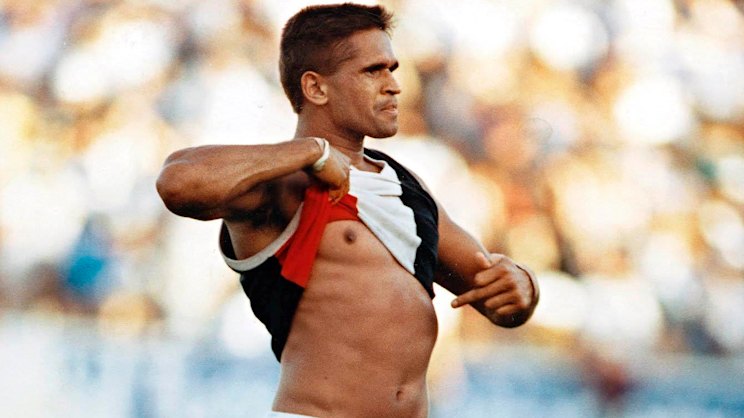
The legendary, iconic 1993 moment when Nicky Winmar stood up against racism at Victoria Park
30 years to the day: Greats reflect on Nicky Winmar’s stand against rac*sm
Subjected to relentless, toxic racial abuse from Collingwood spectators at Victoria Park, Winmar stood defiantly in front of the hostile crowd, lifted his St Kilda jumper, pointed proudly to his chest, and declared: “I’m black and I’m proud.”
That single, courageous gesture was captured in an iconic photograph that transcended sport, serving as a catalyst for the AFL to establish its historic racial vilification rules in 1995.
For over thirty years, that defiant image stood as a shining beacon of human rights, reconciliation, and sporting bravery.
In recognition of his stellar athletic career and his profound social impact, Winmar was officially inducted into the prestigious Australian Football Hall of Fame in 2022.
To cement his legendary status, a magnificent, five-meter-tall bronze statue capturing his historic 1993 gesture was erected outside Perth’s state-of-the-art Optus Stadium.
Yet, that towering monument, meant to stand for centuries as a testament to human dignity, would ultimately be brought down in a matter of hours by a disturbing courtroom verdict.
The pristine legacy that Winmar spent a lifetime building was utterly shattered when he was dragged before the Bendigo Magistrates’ Court in Victoria.
The details of the criminal allegations leveled against the 60-year-old former athlete were deeply distressing and sent shockwaves through the sporting world.
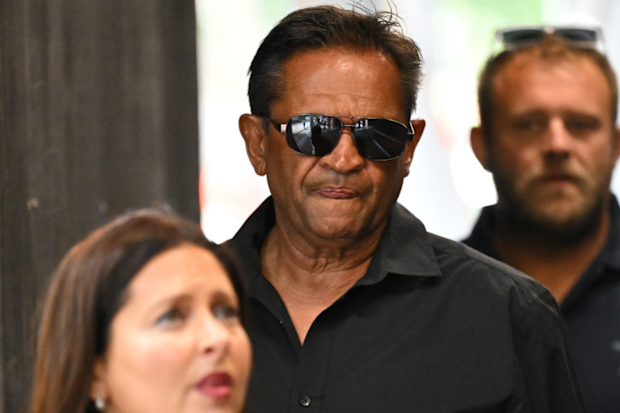
Nicky Winmar entering the Bendigo Magistrates’ Court amid heavy media scrutiny. Cre: Nine
AFL great Nicky Winmar found guilty over brutal assault on a woman
The prosecution presented a terrifying account of domestic abuse, alleging that Winmar had grabbed a woman, dragged her v*olently by her hair, and repeatedly slammed her head into a door.
Following a tense and emotionally charged trial, the magistrate found Winmar guilty of three counts of unlawful and common assault, sparking instant, widespread condemnation across the nation.
The backlash from both political leaders and sporting authorities was swift, aggressive, and completely uncompromising.
Under direct instructions from Western Australian Premier Roger Cook, who declared that “v*olence against women is never acceptable,” heavy machinery was brought in to physically tear down Winmar’s bronze statue from outside Optus Stadium.
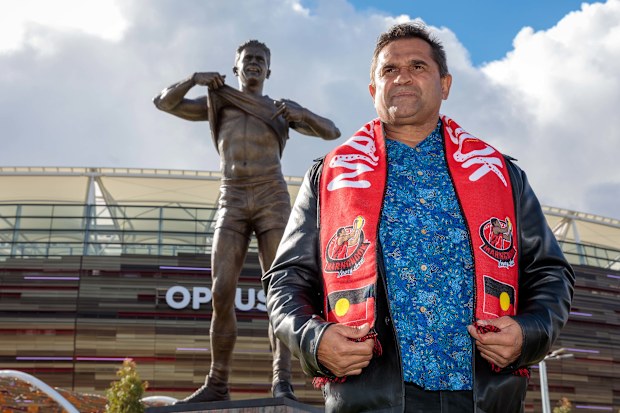
Cre: Nine
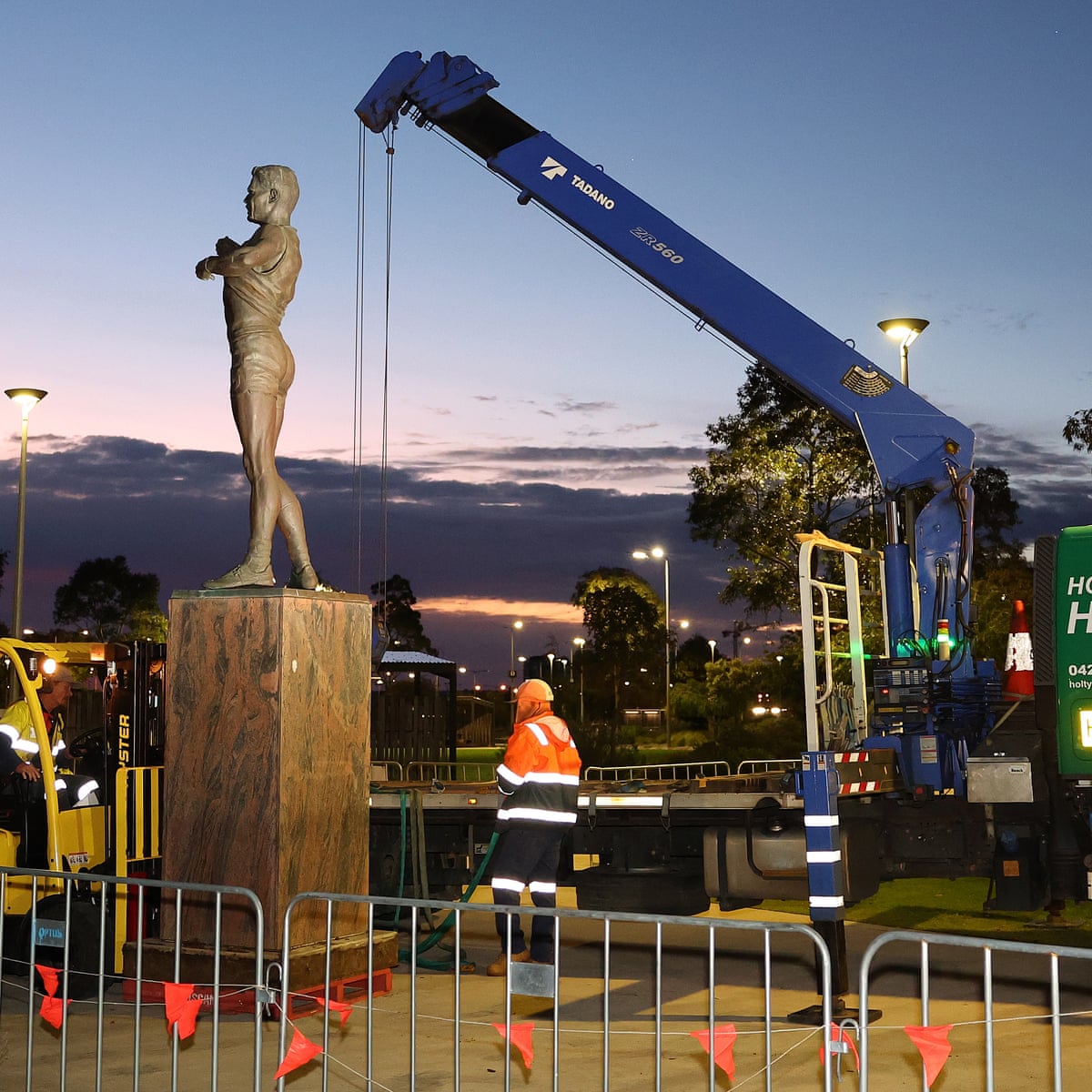
Construction crews using a crane to dismantle and remove the Nicky Winmar statue from Optus Stadium
Shortly after the physical demolition of his monument, the AFL Commission delivered the ultimate sporting punishment, invoking its strict code of conduct.
The Commission exercised its power to strip Winmar of his Hall of Fame status, declaring that his v*olent actions had brought the entire sport into disrepute.
AFL Commission Chair Craig Drummond released a powerful, unyielding statement making it clear that the league would prioritize the protection of women over sporting nostalgia:
“V*olence against women has no place. Not in our community, not in our game, and not in the values the Australian Football Hall of Fame seeks to uphold.
The Commission acknowledges Nicky Winmar’s significant contribution to Australian football and his place in our history.
However, the recent findings against him render inappropriate his place in the Australian Football Hall of Fame.”
Simultaneously, St Kilda, the very club where Winmar had achieved his greatest athletic triumphs, moved to suspend him from their own club Hall of Fame.
While the club decided to wait until the “formal conclusion of the full legal process” before making a final determination, their public distancing from their former hero was absolute.
Cre: The Guardian
St Kilda Football Club statement announcing the suspension of Winmar from their Hall of Fame
Faced with the total annihilation of his public life, his career achievements, and his physical legacy, Nicky Winmar has refused to remain silent, launching a furious counter-attack against the AFL.
In an explosive, highly defensive public statement, the disgraced great lashed out at the football league, accusing them of premature execution and rank hypocrisy.
Winmar pointedly criticized the AFL Commission for stripping his Hall of Fame status before he has even had the opportunity to have his legal appeal heard in court:
“I am appealing the verdict. I would also like some clarity from the AFL as to why there are other players in the Australian Football Hall of Fame who have been found guilty of similar charges, and why I have been removed before the appeal has even been heard.”
Winmar’s defiant defense has struck a highly sensitive nerve within the sporting industry, forcing many to examine the consistency of the AFL’s moral policing.
Commentators have pointed out that other legendary figures with histories of v*olence, such as Wayne Carey—who pleaded guilty to indecent assault in 1996—remain safely ensconced within the Hall of Fame.
By raising these uncomfortable questions, Winmar is challenging the AFL to explain why he has been singled out for such immediate, total erasure while others continue to enjoy their accolades.
Cre: fremantlefc
The rapid, total dismantling of Nicky Winmar’s legacy has left the Australian sporting landscape deeply fractured and uncertain.
For many, the swift removal of his statue and honors represents a vital, non-negotiable stand against the scourge of domestic v*olence, proving that no sporting icon is above the law.
For others, particularly within the Indigenous community, the sudden demolition of the statue is viewed as a devastating blow that erases a powerful, historic symbol of anti-racism that belonged to the entire nation, not just to Winmar himself.
As Winmar prepares to fight his conviction in the appeals court, the fate of his legacy hangs in a precarious, highly volatile balance.
Whether he can successfully clear his name and salvage a sliver of the respect he once commanded remains to be seen, but the golden era of the St Kilda champion is officially over.
The empty, cordoned-off plinth outside Optus Stadium now stands as a quiet, haunting reminder of how quickly a lifetime of heroism can be undone by acts of v*olence behind closed doors.