More Than Just Football: The Secret Pact Between The Daicos Brothers That Left Fans in Tears…
The roar of more than 90,000 fans rolled across the MCG like a wave. Every possession sparked another explosion of noise, every brilliant play carried the weight of expectation. Yet amid the deafening cheers, one quiet moment seemed to say more than any goal celebration ever could. Nick Daicos glanced toward his older brother Josh, who responded with nothing more than a subtle nod. It lasted barely a second, but to those paying attention, it spoke volumes. While the football world sees two of the AFL’s brightest stars, those closest to the Daicos brothers know there has always been something deeper driving them—a silent promise forged years ago in the backyard where their football dreams first began.

Few sibling stories in modern Australian sport have unfolded quite like theirs. Growing up under the guidance of Collingwood great Peter Daicos, both brothers carried enormous expectations long before they pulled on the black-and-white guernsey. Josh arrived first, carving out his own reputation through relentless work ethic and consistency. Then came Nick, whose extraordinary talent quickly made him one of the league’s biggest stars almost overnight.
With fame, however, came relentless scrutiny. Every match became another comparison. Every headline asked who was better. Every outstanding performance by one brother inevitably invited questions about the other. The football media loves a rivalry, even when none truly exists.
Professional sport has a habit of pulling families apart. Individual awards, contracts, All-Australian selections and Brownlow conversations often create invisible competition between teammates—especially brothers sharing the same club colours. History has shown that sibling relationships in elite sport can become strained under constant comparison.
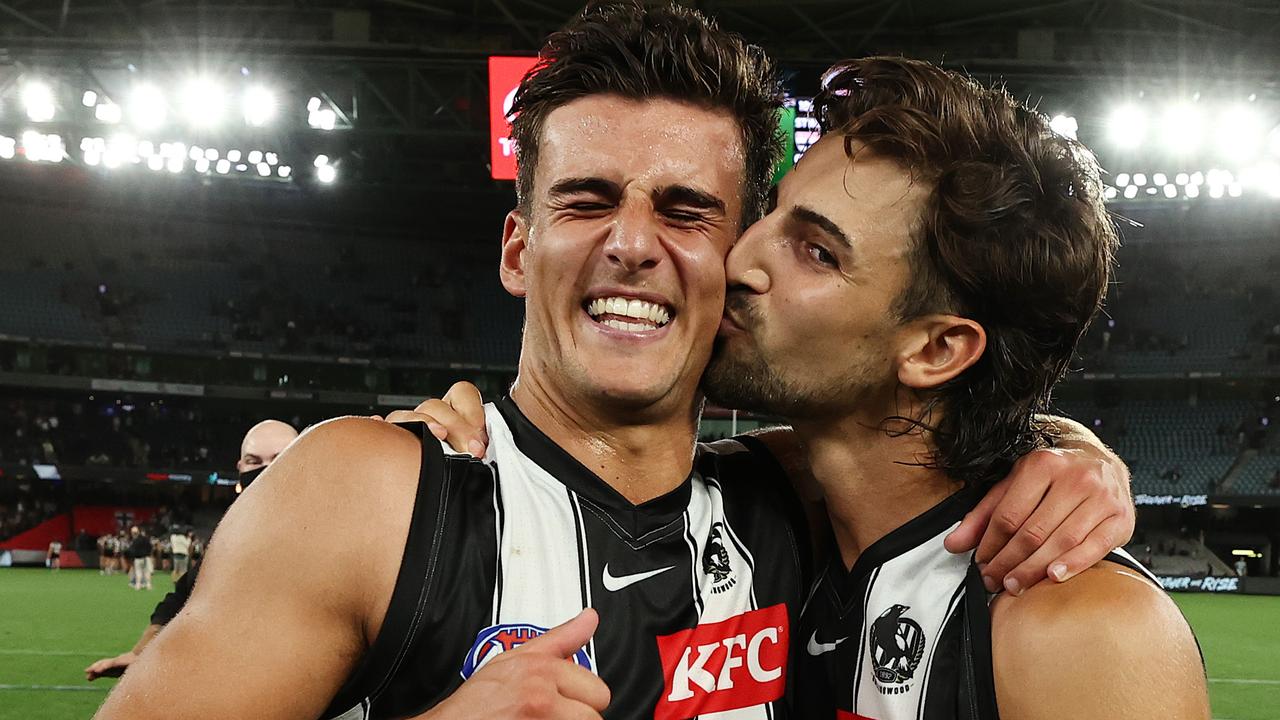
But the Daicos brothers appear to have made a different choice.
Those around the club have often described their relationship as one built on quiet encouragement rather than competition. On countless occasions, Josh has happily celebrated Nick’s breathtaking moments without the slightest hint of envy. Likewise, Nick has never hesitated to praise the experience and leadership Josh brings to the team. Instead of competing for the spotlight, they seem content sharing it.
Sometimes that support is obvious. Other times it reveals itself in subtle moments during matches—a shepherd that allows the other an extra second with the ball, a quick embrace after a difficult quarter, or the first person arriving to celebrate after a goal. These are not statistics recorded on the AFL website, but they tell a story that resonates with supporters.
Perhaps the greatest test of any bond comes during adversity rather than triumph.
Like every footballer, both brothers have experienced painful defeats, criticism from commentators and the crushing disappointment that inevitably follows finals heartbreak. Injuries, media pressure and impossible expectations have all become part of their journey.
Yet whenever one brother has found himself under the microscope, the other has quietly stepped closer rather than further away.
Whether it has been defending each other through interviews, refusing to fuel media comparisons or simply standing shoulder to shoulder after difficult losses, they have consistently projected the same message: family comes first.
Many fans believe that this unspoken commitment is the real “secret pact” between them. Not a written agreement or dramatic confession, but an understanding formed long before AFL contracts and television cameras entered their lives. Success would never come at the expense of each other.
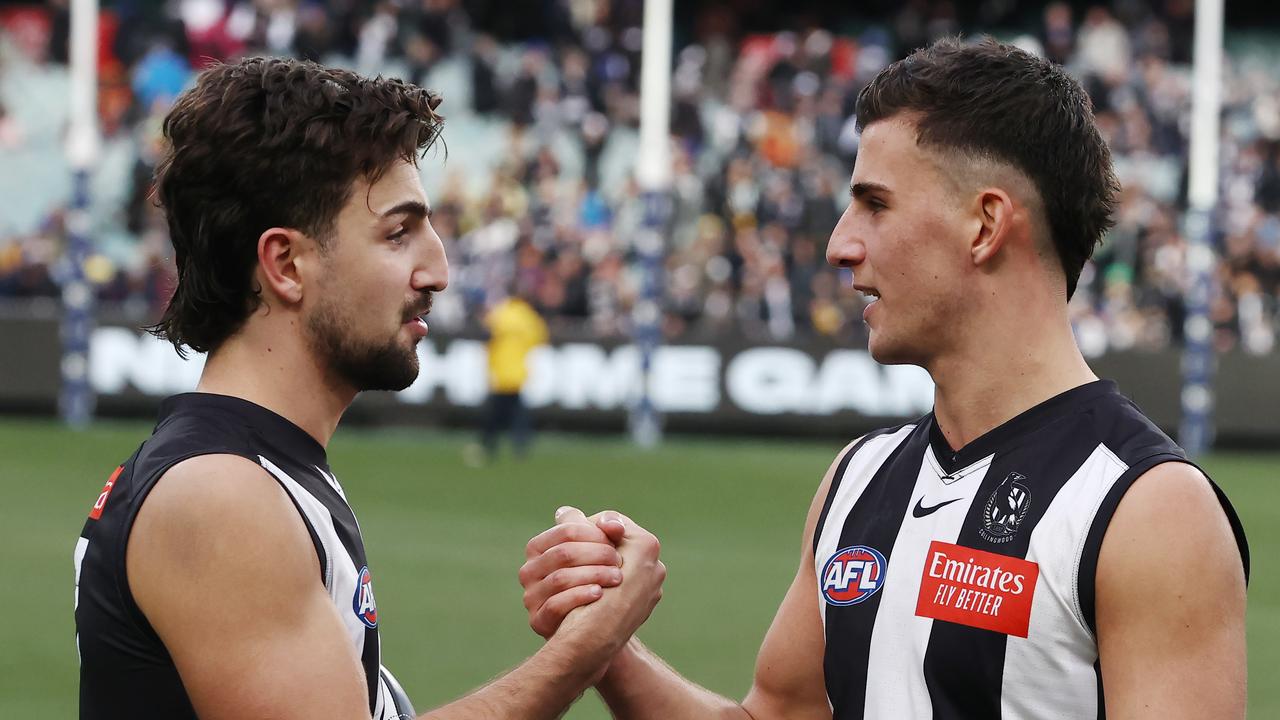
Supporters have certainly noticed.
Social media regularly fills with comments celebrating not just their football brilliance, but their genuine affection for one another. Fans frequently point out the small interactions that television cameras accidentally capture—the encouraging pat on the back after an error, the smiles exchanged before centre bounces, or the instinctive way they seek each other out after the final siren.
Many describe them as a refreshing reminder that elite sport does not have to be driven solely by ego or individual ambition. Others say the brothers represent the kind of loyalty that seems increasingly rare in professional competition.
In an era where athletes are often encouraged to build personal brands and chase individual accolades, the Daicos brothers offer something quietly powerful. They demonstrate that strength is not measured only by goals kicked or medals won, but also by the willingness to celebrate another person’s success as enthusiastically as your own.
Their relationship challenges outdated ideas about masculinity in elite sport. Vulnerability is rarely expressed through speeches or grand gestures. Sometimes it appears in trust, loyalty and the confidence to let someone else shine without feeling diminished.
That may ultimately become one of their greatest contributions to Australian football.
Years from now, statistics will fade. Premierships will be debated. Individual awards will eventually become historical footnotes. Future generations will remember spectacular goals, impossible sidesteps and breathtaking passages of play.
But perhaps the image that will endure the longest is far simpler.
Two brothers standing side by side, sharing a quiet glance in the middle of the MCG as thousands cheer around them. No words are needed because the promise they made as boys remains unbroken.
Long after the boots are hung up and the final siren has sounded for the last time, Nick and Josh Daicos may not simply be remembered as two extraordinary footballers.
They will be remembered as brothers who proved that the greatest victory in sport is never achieved alone.