For decades, Jill Farnham stood beside one of Australia’s most beloved singers, sharing in the triumphs of his extraordinary career while keeping much of their family life away from public attention.
But when John Farnham was diagnosed with oral cancer in 2022, the woman who had spent more than 50 years by his side found herself facing one of the most frightening chapters of their life together.
In his 2024 memoir, The Voice Inside, Jill offered a rare and deeply personal account of what the family endured — revealing the responsibility she felt to keep everyone together, the fear behind her determination and the difficult decisions that followed John’s diagnosis.
“Over the years I’ve had to be strong,” she wrote.
Her words revealed a side of the family’s struggle that the public rarely sees: the emotional weight carried by the person trying to keep everything from falling apart.

“I’ve had to be a wife, a mother, a psychiatrist, a doctor”
Jill’s contribution to John’s memoir was unusually candid for someone who has long preferred to remain out of the spotlight.
Reflecting on the years she had spent supporting her husband and raising their family, she described how many roles she had been forced to take on at once.
“I’ve had to be a wife, a mother, a psychiatrist, a doctor, I’ve had to be all those things in one,” she wrote.
She continued: “I’ve had to be strong and bossy to keep the family together, to keep moving forward, and I have done that because I love John and I love my family.”
It was a striking admission from the woman who had witnessed John’s rise to fame, his career setbacks and his eventual return to the top of Australian music.
Behind the public image of the celebrated performer was a family navigating its own challenges — and Jill made clear that keeping them moving forward required determination, patience and an unwavering commitment to the people she loved.
Her words were not simply about one difficult period. They offered a glimpse into the responsibility she had felt over many years, and the strength she believed her family needed from her.
The warning sign Jill could not ignore
One of the most confronting revelations in Jill’s account concerned the months before John’s cancer diagnosis.
She recalled noticing a large white mass inside his cheek. Concerned by what she could see, she repeatedly encouraged him to seek medical advice.
“He had a big white mass on the inside of his cheek and you could physically see it,” she wrote.
For months, John resisted her suggestions.
“For several months I was saying to him, ‘Let’s go see about that thing in your mouth,’ and he’d say, ‘No, it’s alright, it’s alright, it’s alright.’”
Eventually, Jill said, she pleaded with him to see a doctor.
“He kept putting it off and putting it off. I pleaded with him to go see a doctor and finally he did.”
John was diagnosed with oral cancer in August 2022. His diagnosis would lead to major surgery and an arduous recovery, changing life for him and those closest to him.
Looking back, Jill explained that her instinct to act quickly — combined with her fear of losing her husband — helped push the family towards confronting the situation.
Her recollection offers a deeply personal account of the uncertainty that can exist before a diagnosis, when someone close to you is worried but cannot make the decision to seek help on their behalf.
A 12-hour operation changed the family’s world
John underwent an approximately 12-hour operation in late 2022 to remove a cancerous tumour from his mouth.
The procedure was followed by radiation treatment and a difficult recovery. Jill later addressed public misconceptions about the surgery, clarifying that doctors had removed the cancer from his cheek and scraped his jaw to check whether the disease had reached the bone.
“They didn’t take his jaw,” she wrote, correcting reports that had suggested otherwise.
Thankfully, the cancer had not spread into the jawbone. But the treatment still left John facing significant physical challenges.
Jill explained that radiation had caused the tissues and muscles on one side of his face to become extremely stiff, making it difficult for him to open his mouth.
Eating also became a struggle.
While John was in hospital, he was being fed through a tube in his stomach. Jill began bringing in home-cooked food, hoping familiar meals would help him regain some comfort.
She recalled that he would sometimes manage only a couple of mouthfuls before he could eat no more.
“For a while there, it felt like one thing on top of another for John,” she wrote.
The family eventually saw encouraging signs as he returned to eating, although the effects of treatment continued to make everyday activities difficult.
For Jill, these details revealed the reality behind the headlines: recovery was not a single milestone, but a long process filled with small improvements, setbacks and uncertainty.

Would John ever sing again?
For an artist whose voice had become part of Australia’s cultural identity, one of the most painful questions after his cancer treatment was whether he would ever sing on stage again.
Jill admitted she did not know what the future would hold.
“I don’t know if John will sing again,” she wrote.
She explained that the radiation had left one side of his face extremely stiff, and surgeons would need to determine whether the tissues could be loosened enough to help him regain movement.
“We have to be patient,” she wrote.
Jill also acknowledged how difficult the uncertainty was for John himself. Performing had been a central part of his life, and the possibility that he might never return to the stage was deeply disappointing.
Yet her account did not present his future as settled. At the time she wrote those words, the family was still waiting to see how his recovery would progress.
For fans who had spent years singing along to You’re the Voice, the thought of John being unable to perform again was difficult to accept. For Jill, it was a deeply personal uncertainty involving the man she had shared her life with for decades.
More than 50 years together — and a new chapter neither could have planned
Jill’s reflections formed part of a marriage that had lasted more than five decades by the time The Voice Inside was published in 2024.
Their life together had included extraordinary professional success, family milestones and the challenges that come with a career lived partly in the public eye. But John’s cancer diagnosis brought a different kind of uncertainty — one that fame and achievement could not make easier.
Jill described her husband as someone who could be reluctant to confront difficult situations directly. She said her own instinct was to deal with problems without delay, a difference that became particularly significant when she became concerned about his health.
Her account showed how the couple’s contrasting personalities shaped the way they faced adversity.
It also revealed the devotion behind her determination. As Jill explained, she had pushed John to seek medical advice and worked to keep their family moving forward because she loved him and their children.
The memoir did not erase the fear or the difficulty of those years. Instead, it gave readers a rare opportunity to understand what the experience had demanded of the family behind one of Australia’s most celebrated musical careers.
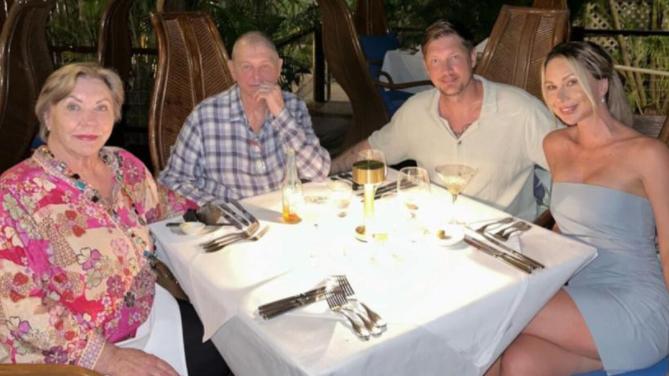
John’s health update brings renewed attention to Jill’s words
In September 2026, Jill and the couple’s sons, Robert and James, issued a new statement explaining that John’s health had deteriorated in recent months.
The family said the 77-year-old singer required continuous oxygen support, used a wheelchair for mobility and needed round-the-clock nursing care at home.
They also confirmed that he would not attend the tribute concert celebrating his music at Melbourne’s Rod Laver Arena. The family said they believed it was best for him to remain at home, where he could be safe and comfortable.
The statement offered a rare public glimpse into the family’s current circumstances after they had kept many details private while adapting to John’s changing needs.
Against that backdrop, Jill’s earlier words about having to be strong carry renewed emotional weight. They were written about the challenges surrounding his cancer diagnosis and recovery, not as a prediction of what would happen years later. But they reveal the determination with which she approached a frightening period in their lives.
For fans, John Farnham will always be remembered for the power of his voice and the songs that became part of Australia’s story.
Jill’s account reminds readers of the quieter story behind that legacy: a wife who urged him to seek help when she was worried, stood beside him through a gruelling treatment and tried to keep her family moving forward when so much remained uncertain.
And in her own words, the reason she kept going was simple.
She loved John, and she loved her family.