For decades, Dawn Fraser was known as one of Australia’s toughest sporting champions. She made history in the Olympic swimming pool, defied expectations and built a reputation as a woman who simply refused to give up.
But behind that formidable image, the Australian sporting legend has endured a deeply frightening health battle that left even her closest family members fearing they might lose her.
At 89, Fraser is still determined to look ahead. Yet the road to this point has been far more difficult than many people realise.
It began with a seemingly ordinary accident at her Queensland home in December 2024. What followed was emergency surgery, a frightening warning from an anaesthetist, a cardiac episode in which doctors told her that her heart had stopped for five seconds, and a recovery that saw her lose significant weight and strength.
Her daughter, Dawn-Lorraine Fraser, and grandson Jackson were left confronting the possibility of life without the woman they had always regarded as remarkably strong.
And while Fraser has since found her way back into the swimming pool, her latest public appearance has offered another reminder of just how much she has been through.
The Ordinary Accident That Changed Everything
The first major health crisis occurred on December 4, 2024, when Fraser was 87.
She was at her Queensland home on the Sunshine Coast when she suffered a serious fall on the driveway, an accident caused by a small obstacle near a recently renovated gate.
In an interview with The Daily Telegraph, later reported by The Nightly, Fraser explained that she had been opening a case of Coca-Cola when her foot became caught on a small raised edge.
“I was opening a case of Coca-Cola. I slipped opening the plastic container. My foot got caught on the little ledge we’d just had made for the gate,” she recalled.
The fall left her in excruciating pain. She broke her hip and four ribs and also suffered a deep cut to her left arm.
Fraser was at home when the accident happened, with her family away shopping. Fortunately, she had her mobile phone with her and managed to contact a neighbour for help.
She later described the experience as something she had never expected to face.
“The pain was excruciating,” she said.
“I’d never felt pain like that before. I’ve never sort of fallen or broken anything in my life and it was a shock to me.”
Following the accident, she was taken to hospital and admitted to intensive care.
What initially appeared to be a serious fall soon became a much more complicated medical emergency.
The Warning That Left Her Family Terrified
Doctors discovered that Fraser had suffered significant damage to her hip and raised concerns about possible internal bleeding.
The medical team ultimately decided that repairing the damaged hip would be too dangerous because of the risk of further bleeding.
Instead, she underwent an emergency full hip replacement on December 5, 2024.
But before the operation, Fraser received a warning that would stay with her.
Her anaesthetist told her that she might not survive the procedure.
“When the anaesthetist came in and said I could die, that was the frightening part,” Fraser later recalled.
The possibility of not waking up after surgery was particularly difficult for the swimming champion to contemplate.
She had spent most of her life approaching difficult challenges with determination, but this was a different kind of fight — one in which she had little control over what happened next.
“I wasn’t going to give in,” she said.
Meanwhile, the situation was just as frightening for her daughter.
Dawn-Lorraine later revealed that doctors had asked what the family wanted them to do if something went wrong during the operation.
It was a question no daughter wants to face when her mother is fighting for her life.
“It’s the worst question someone can ask you,” she explained to the ABC.
Her answer was immediate: she wanted the doctors to do everything possible to save her mother.
She insisted that Dawn was a fighter and that the medical team should proceed with resuscitation if necessary.
Dawn-Lorraine later admitted that she had genuinely feared losing her mother.
“It’s been scary … I thought we were going to lose her,” she said.
The family had always seen Fraser as someone almost impossible to defeat. Suddenly, they were confronting the very real possibility that even her extraordinary resilience might not be enough.

A Difficult Recovery – And Another Medical Emergency
Fraser survived the operation and initially appeared to be making encouraging progress.
On December 11, 2024, her daughter told the ABC that her mother was doing considerably better, although she stressed that the recovery was only beginning.
Despite having undergone a full hip replacement and suffering four broken ribs, Fraser was already attempting to walk around her hospital room.
Doctors even had to remind her to slow down.
Nine days after the accident, on December 12, she was discharged from hospital and returned to her daughter’s home to continue rehabilitation and physiotherapy.
Dawn-Lorraine described her return as an enormous relief, particularly after the family had been so uncertain about whether she would make it through surgery.
However, the difficult period was far from over.
Just weeks after the fall, Fraser experienced another frightening medical incident while visiting a surf club in Queensland.
She suddenly began feeling faint before losing consciousness.
The episode was particularly alarming because it came while she was still recovering from her serious injuries.
Fraser later told 10 News presenter Sharyn Ghidella:
“Unfortunately, I started to feel very faint and I fainted.”
She was subsequently informed that her heart had stopped for approximately five seconds and that her heart rate was extremely low.
According to her account, her heart rate had always been low during her competitive swimming years, but it had continued to fall as she grew older.
Following the incident, she was rushed to Noosa Hospital, where doctors fitted her with a pacemaker.
It was another significant medical intervention in a period when she had already endured emergency surgery and an extremely difficult physical recovery.
Losing 22 Kilograms and the Emotional Toll Nobody Saw
The physical consequences of Fraser’s health struggles were considerable.
In May 2025, she revealed that she had lost approximately 22 kilograms and a significant amount of her strength.
“I’ve lost 22 kilos and a lot of strength,” she told The Daily Telegraph.
For a woman who had spent much of her life training, swimming and remaining physically active, the loss of strength represented a major change.
The recovery was not simply about healing her hip or allowing her ribs to recover. She also had to adjust to a body that could no longer do many of the things she had once taken for granted.
Now To Love reported that Fraser also experienced a brief period of depression during this difficult recovery.
Her daughter offered an unusually candid description of what the family had been experiencing.
“It’s been a nightmare,” Dawn-Lorraine told Ten.
It was a difficult period for everyone around Fraser, particularly those who had grown accustomed to seeing her as the family’s strongest presence.
Her grandson Jackson also spoke about how difficult it was to witness the changes in his grandmother.
“I always saw her as invincible,” he said.
That short observation captured something particularly poignant about the experience.
For Jackson, the woman recovering from surgery and struggling to regain her strength was the same grandmother he had always known as strong, determined and dependable.
The difference was that this time, she needed her family to be there for her.
Finding Her Way Back to the Water
Despite everything she had endured, Fraser was not ready to abandon the activity that had defined so much of her life.
Swimming had brought her Olympic glory, but during rehabilitation it also became an important part of rebuilding her physical strength.
By May 2025, she revealed that she had started returning to the pool.
She also described how she had adjusted her exercise routine to accommodate her knees, back and hip.
“I do a lot of running in the water for my knees and my back and my hip,” she explained.
She acknowledged that she could no longer move at the speed she once had.
“I’m slower, I’ve got to accept that,” she admitted.
But getting back into the water had given her something important: a renewed sense of happiness and purpose.
“I’m good now that I’m back in the pool. I feel happy. I hope to get some of my strength back because I’ve lost a lot,” she said.
It was not a return to the intensive training that had once made her an Olympic champion.
Instead, it represented a different kind of achievement — learning to adapt, accepting her limitations and finding enjoyment in an activity she had loved for most of her life.
For Fraser, the pool was no longer about chasing another record. It was about maintaining her strength and spending more precious time with the people she loved.
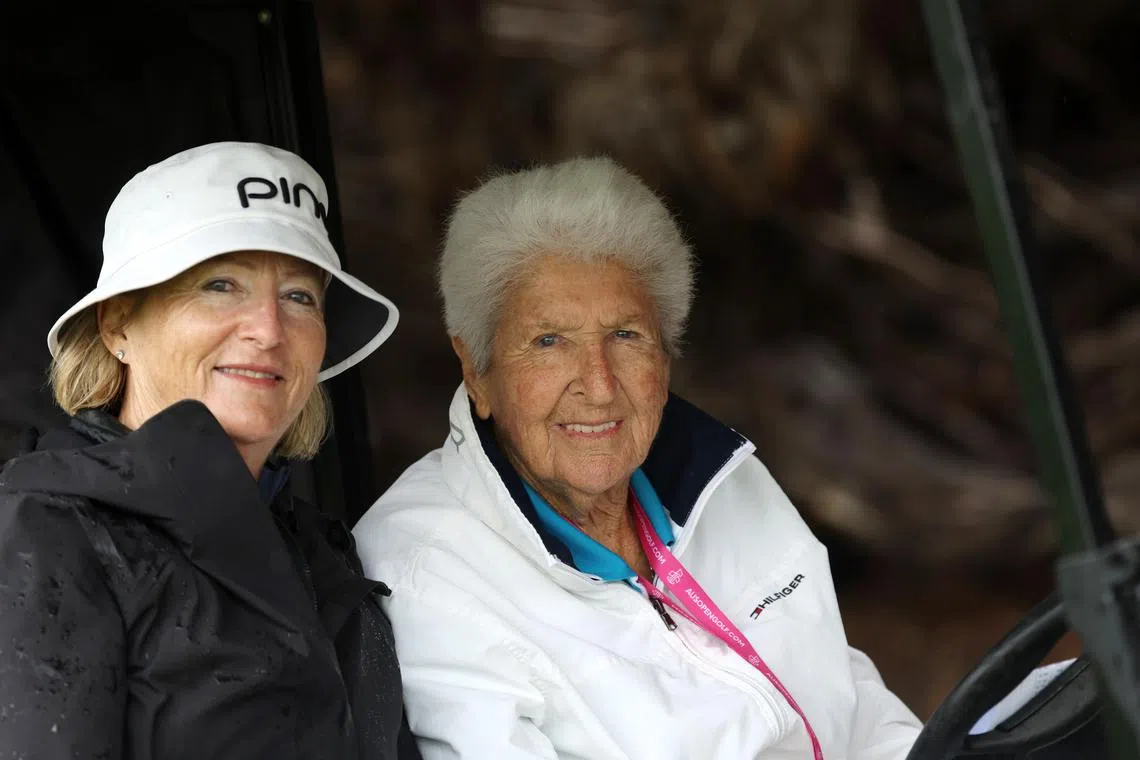
Her Latest Appearance at 89 – And the Dream She Still Refuses to Give Up
More than a year after those deeply unsettling revelations, Fraser’s health remains a subject of interest.
On November 22, 2026, the 89-year-old attended a special gathering at the Melbourne Cricket Ground to mark the 70th anniversary of the 1956 Melbourne Olympic Games.
Her appearance was particularly meaningful because she had been unable to attend a commemorative dinner in Melbourne several weeks earlier due to another health issue.
At the MCG celebration, Fraser used a wheelchair and planned to move between tables to reconnect with old friends and fellow Olympians.
The sight offered a very different image from the fearless young swimmer who had once dominated the Olympic pool.
Yet her words suggested that her determination had not disappeared.
When asked whether she hoped to attend the Brisbane 2032 Olympic Games, Fraser made it clear that she still had a goal ahead of her.
“I would love to be there at ’32, to support our athletes,” she told AAP.
She admitted that reaching another Olympics seemed a long way off when considering her age.
But meeting athletes who were 95 and 99 years old gave her a different perspective.
“Then I’m thinking — excuse the expression — ‘Shit! I can do that. If they can do it, I can do it.’”
It was a typically spirited response from a woman who has spent her entire life refusing to accept that difficult circumstances should automatically mean giving up.
Fraser’s use of a wheelchair at the event does not, by itself, establish the details of her current medical condition. No specific diagnosis explaining her latest health issue was disclosed in the ABC report.
Still, her appearance and determination to attend the reunion showed how much she valued remaining connected to the sporting community that had shaped her life.
A Different Kind of Fight for the Woman Who Once Seemed Invincible
Dawn Fraser’s Olympic achievements are extraordinary.
She won eight Olympic medals, including four golds, and became the first woman to win the 100-metre freestyle at three consecutive Olympic Games.
But her recent health struggles have revealed another side of her story — one that has little to do with medals, records or sporting fame.
There was the daughter who had to answer a doctor’s difficult question about whether her mother should be resuscitated.
There was the grandson who had always regarded his grandmother as invincible, suddenly watching her struggle through a painful recovery.
And there was Fraser herself, facing the prospect of not surviving an operation, dealing with an unexpected cardiac episode and learning to accept that her body could no longer do everything it once had.
Her recovery has not followed a simple or predictable path. Even now, at 89, she has experienced another health setback, although the details have not been made public.
But the Brisbane 2032 dream offers a glimpse of what continues to motivate her.
For a woman who once spent her life racing towards the finish line, the challenge now is very different.
It is about holding on to her independence, finding strength in the small victories and having more time with her daughter and grandson.
And perhaps, above everything else, it is about proving that the determination that made Dawn Fraser an Olympic legend is still very much a part of who she is.