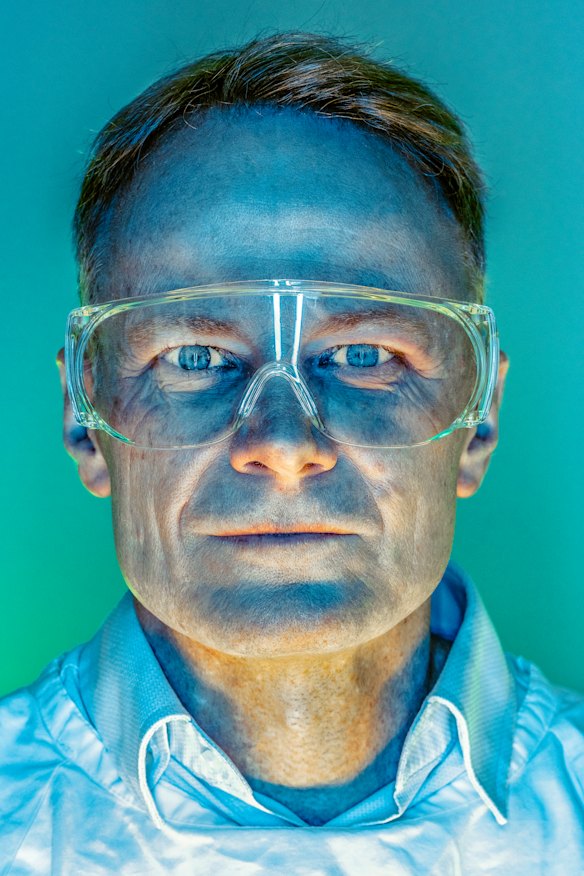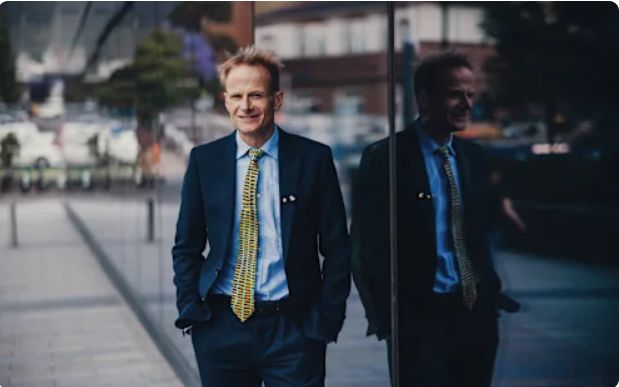
The world has bid farewell to a titan of medicine and a quiet hero. Professor Richard Scolyer, the 2024 Joint Australian of the Year and one of the globe’s foremost melanoma experts, has passed away at the age of 59 after a nearly three-year battle with the deadliest of brain cancers. He leaves behind an unparalleled legacy: one that ignited a revolution in oncology and sparked hope for millions of future patients.
From a nature-loving boy in Tasmania to one of the world’s most cited pathologists, and ultimately to the brave “Patient Zero” in an unprecedented clinical trial, the life of Richard Scolyer is an epic tale of courage, boundless compassion, and a dedication to science that endured until his final breath.
From a Tasmanian Upbringing to a Global Medical Icon
Born on December 16, 1966, in Launceston, Tasmania, Richard grew up surrounded by the island’s rugged beauty. His childhood was a happy blur of footy, swimming, and caravanning holidays with his parents, Maurice and Jenny, and his older brother, Mark.
His adventurous spirit was grounded in a philosophy of “how,” rather than “if.” The turning point that led him to medicine occurred when he watched his mother struggle with health issues following a stroke. Determined to make a difference, he studied medicine at the University of Tasmania. After working across Australia and England, a nudge from his pediatrician uncle steered him toward pathology.
It was during his training at the Royal Prince Alfred (RPA) Hospital in Sydney that his life blossomed both professionally and personally. There, he met Dr. Katie Nicoll, who would become his devoted wife and the mother of their three children: Emily, Matthew, and Lucy.
Saving Millions: A Monumental Legacy in Melanoma
Professor Scolyer’s career reached its zenith at the Melanoma Institute Australia (MIA), where he served as Co-Medical Director alongside his close colleague, Professor Georgina Long. Driven by a bold vision to reach zero deaths from melanoma, their partnership reshaped global medicine.
His professional achievements constitute a gold standard in oncology:
-
Pioneering Immunotherapy: His team spearheaded the use of combination immunotherapy before surgery, a breakthrough that skyrocketed the five-year survival rate for advanced melanoma patients from under 5% to a staggering 55%.
-
Setting Global Standards: Co-authoring over 1,000 peer-reviewed papers, Scolyer was instrumental in shaping the American Joint Committee on Cancer (AJCC) staging system and the World Health Organization (WHO) Blue Books, unifying how doctors worldwide diagnose skin cancer.
-
The World’s Largest Biobank: He helped establish an immense open-source melanoma biobank, allowing international researchers to access tissue samples and clinical data to accelerate the search for a cure.
-
Public Health Advocacy: Beyond the laboratory, Scolyer campaigned fiercely and successfully to ban commercial tanning beds (solariums) across much of Australia, effectively saving countless Australians from deadly UV exposure.
In recognition of these monumental contributions, he was appointed an Officer of the Order of Australia (AO) in 2021 and crowned joint 2024 Australian of the Year.
The Cruel Twist and the Decision to Become “Patient Zero”
In May 2023, at the absolute peak of his career and physical fitness—having regularly represented Australia in age-group triathlons—Richard suffered a seizure while at a conference in Poland.
The diagnosis was a death sentence: IDH-wildtype Glioblastoma, the most aggressive form of brain cancer. The median survival time was a bleak 12 to 14 months, with 75 percent of patients his age dying within the first year.
Faced with this grim reality, Scolyer made an unimaginably courageous choice. Instead of accepting the standard, life-prolonging care, he volunteered to be a “guinea pig.” Under the guidance of Professor Long, they took the immunotherapy science they had perfected for melanoma and hurled it at his brain tumor. He became the first person in the world to receive combination immunotherapy prior to brain surgery, supplemented by a personalized cancer vaccine.
He knew the radical treatment could kill him faster. Yet, he also knew that, as a scientist, his body could provide the data needed to “blow open” a field of neuro-oncology that had barely advanced in two decades.
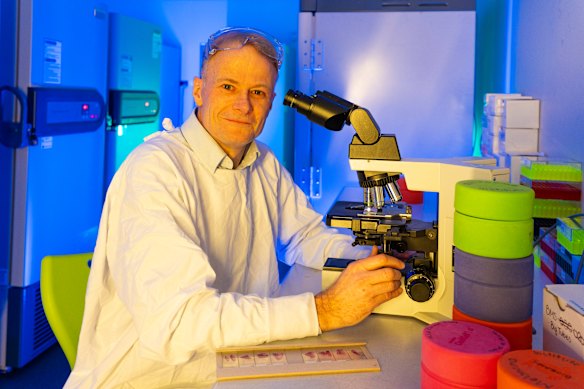
Living Fully in the Shadow of a Death Sentence
Against all odds, the gamble paid off. Instead of succumbing in months, Professor Scolyer survived for three years, remaining completely cancer-free for 18 of them.
But it wasn’t just his physical endurance that captivated the globe; it was his indestructible spirit. Throughout his grueling treatments, he refused to stop living. He cycled hundreds of kilometers in the Tour de Cure to raise funds, met King Charles III to present him with an iconic sun-safe Akubra hat, ran the City2Surf alongside his family, and gloriously completed his 250th parkrun to the cheers of thousands just months before his death.
Even when the tumor aggressively returned in March 2025 and his energy waned, he asked his family to keep sharing his journey online. He wanted to show the world that, as he wrote, “Cancer does not define us. It may be the current road we are travelling, but it is not our entire journey. A terminal cancer diagnosis does, however, provide clarity as to what truly matters.”
The Immortal Legacy of an “Everyday Aussie”
Richard Scolyer is gone, but the reverberations of his sacrifice will be felt for generations:
-
His clinical data, published in Nature Medicine, has charted a new frontier in medical science.
-
Clinical trials based on his exact treatment protocol have now commenced in the United States and Australia.
-
The Australian Government has pledged $5.9 million to establish the Richard Scolyer Chair in Brain Cancer Research, ensuring his quest for a cure continues.
In a poignant, tear-jerking open letter released after his passing, Professor Scolyer thanked his brilliant wife Katie, his children, and the Australian public. Despite achieving the highest academic and civic honors a person can reach, he asked to be remembered with profound simplicity:
“If my legacy was to continue beyond these words, I would be delighted and humbled to be remembered as a proud everyday Aussie who ‘gave it a crack’, and in doing so, inspired others to pursue their dreams and passions with humility, love and compassion.”
A nation wept at the loss of this remarkable man, but as Prime Minister Anthony Albanese declared: “One day when a cure is found, Richard’s name will be spoken.” Professor Richard Scolyer lived an extraordinary life—one defined by fierce intellect, radical bravery, and a limitless love for humanity.